
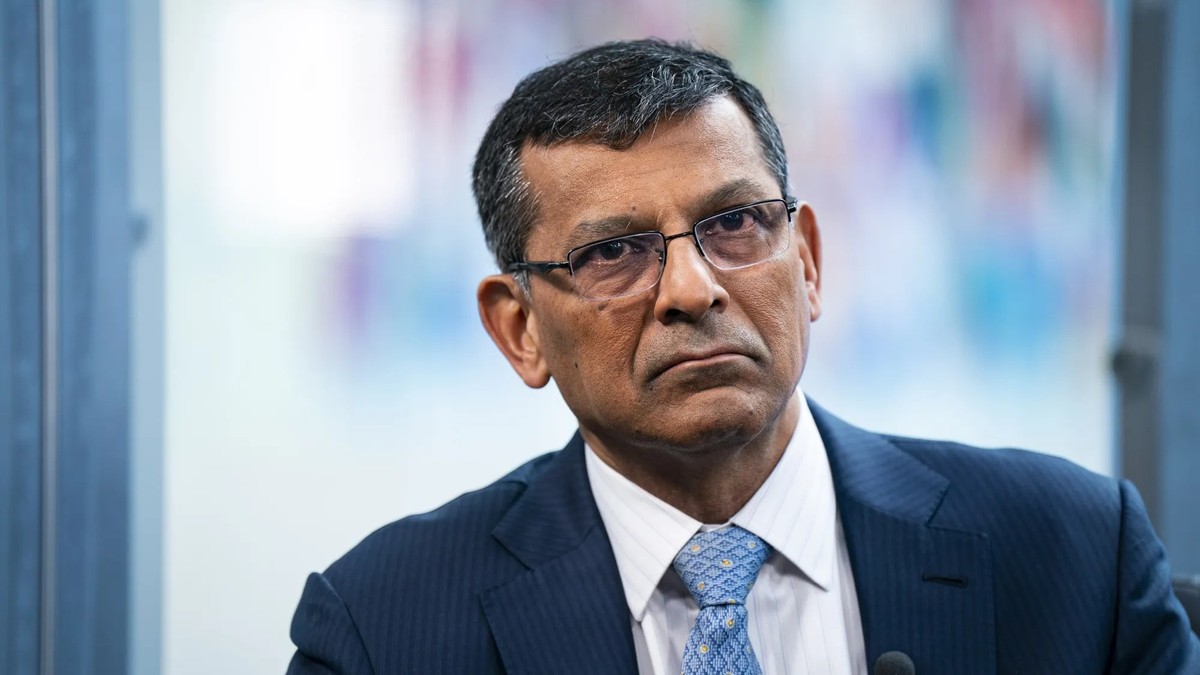
Yet another NRI hits the jackpot
A few days back, the International Monetary Fund (IMF) announced the
appointment of the 40-year old Raghuram Rajan as the head of its prestigious
research department and Economic Counsellor to its Board. This is the
second unusual move by the stodgy IMF in the past two years to salvage
its battered reputation-and both have involved distinguished Indians.
Earlier, Montek Singh Ahluwalia had been invited to be Director of the
IMF’s new Independent Evaluation Office.
Rajan has been an outstanding business school don at the University
of Chicago having specialised in corporate finance. His appointment
reflects the consensus that at the root of economic crisis in most countries
is the fragility of capital markets and financial systems involving
both government and private actions. The assignment also comes when
the book he has co-authored with his colleague Luigi Zingales Saving
Capitalism from the Capitalists has hit the headlines.
Their basic thesis is that well-functioning financial markets are essential
for economic prosperity. Markets need rules that are transparent and
that do not stifle competition. Rules need to be enforced by institutions
that have credibility. The recipe is five-fold. Curb concentration of
economic power. Improve corporate governance by having a vibrant market
for takeovers. Institute safety nets to protect workers in times of
distress. Expand social security in a financially sustainable manner.
Open up to external competition, particularly in trade in goods and
services but in a sequenced manner in finance and banking.
Most of the solutions proposed to deal with the distortion and subversion
of markets by entrenched vested interests have been recognised in India.
The soon-to-be-notified Competition Act is designed to make competition
both free and fair but how it will be implemented remains to be seen.
A liberal take-over code has been in place for six years, although restrictions
still exist for acquisitions by foreign companies. Most quantitative
restrictions on imports have been eliminated and import duties have
been reduced drastically, although average rates are still at least
double East Asian levels. Liberalisation of the financial sector has
proceeded in a nuanced manner. Where we have not able to make much progress
is having exit policies that are actually pro-labour. India has a lot
of sick industry but no sick industrialist. This is because of our laws
relating to bankruptcy. Labour laws in India have stifled the growth
of a modern factory sector. Regulatory institutions have been set up
but unfortunately they have become a haven for retired civil servants-the
new Competition Commission that could have been the exception given
Arun Jaitley’s leadership has also fallen into the same trap. Their
professional expertise is very weak.
The duo’s observations on the concentration of economic power are interesting.
The example that is given is of India’s diamond trade that is controlled
by a small community of Palanpuri Jains of Gujarat. India is a world
leader in this industry. But can it be sustained if the present structure
of the trade continues? The most innovative proposal is the advice to
countries to consider the political version of anti-monopoly law-“one
that prevents a firm from growing big enough to have the clout in domestic
politics to eventually suppress market forces”. That there are such
firms in India is self-evident.
Seventy years ago, following the Great Depression Franklin Roosevelt
saved capitalism from itself with his New Deal that reflected the influence
of Lord Keynes. After a while, Keynesian economics was challenged by
the University of Chicago orthodoxy. Clearly, this orthodoxy itself
has under grave threat and a “third way” is needed. What Rajan and Zingales
propose as the third way is not startlingly original or new. But Rajan’s
entry into the portals of the IMF give them great operational significance.