
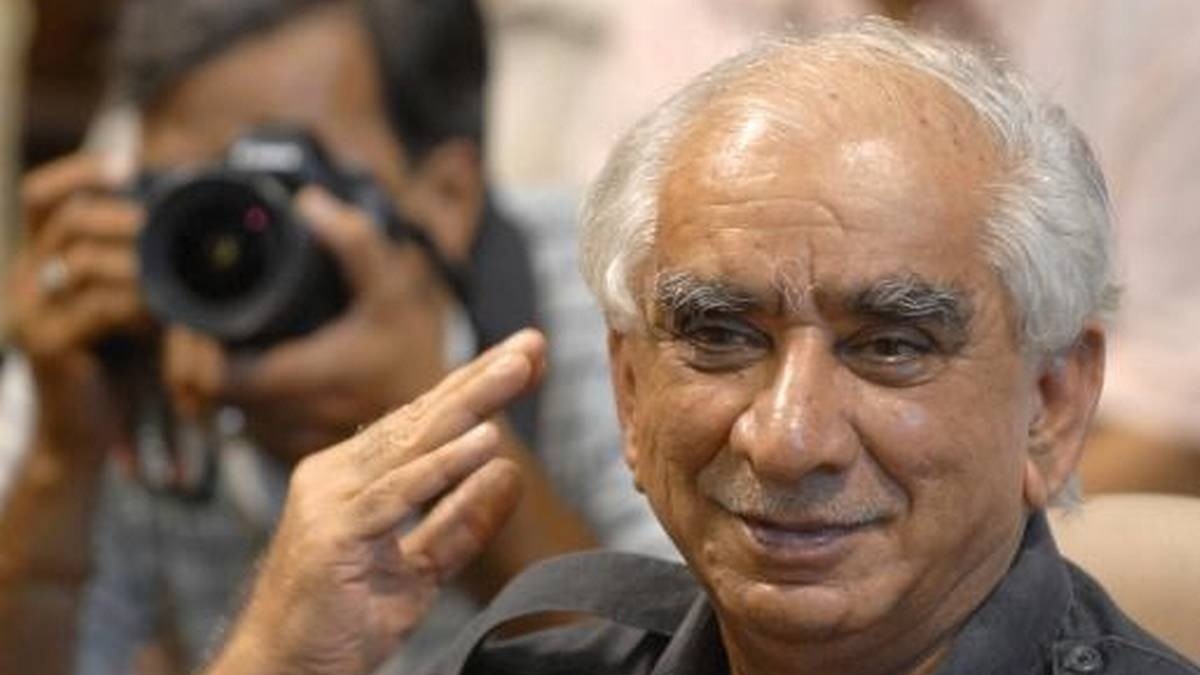
Will Jaswant Be A (Kel)kar Sewak?
In just over a fortnight’s time,
Jaswant Singh will present his maiden budget. All attention will be
on whether he goes with his instinct and listens to his economic advisor
Vijay Kelkar or whether he will bow to the dictates of his political
colleagues. Kelkar’s blueprints on direct and indirect taxes have received
both bouquets and brickbats, although the latter have been more abundant
simply because the criticism is by those who have not read and understood
the two voluminous reports running into well over 500 pages. The reforms
package comprising both tax rates and tax administration-and it must
be viewed as an inter-related package–will make our byzantine, corrupt,
retrogressive tax system simple, transparent, equitable, broad-based
and growth-oriented. It will lead to better individual compliance and
improved corporate governance as well, increasing not just the number
of taxpayers but, more importantly, capturing a greater proportion of
taxable incomes which is the real meaning of increasing the tax base.
Imagine a situation that we have now where just about 75,000 Indians
have reported incomes of more than Rs 10 lakhs! Unfortunately, the way
the BJP party apparatchiks have mangled the Kelkar package in response
to numerous lobby groups is ominous.
While there are a very large number of crucial recommendations to make
the tax system world-class, one has special significance. This concerns
the indirect duty regime for an industry that is not only India’s oldest
but also that is the largest employer and contributor to exports. This
is the textile industry, an industry where India has both comparative
and competitive advantage but that over the decades has been systematically
strangulated by government policy. The urgency of tax reforms for the
textile industry is that in just two years time, the multi-fibre agreement,
that places quotas on the imports of textile products by the USA and
Europe, will be abolished. Then, India will be forced to compete with
countries like China, South Korea, Sri Lanka and Bangladesh. These quotas
have helped neutralise the adverse effects of government policy on the
competitiveness of our textile industry. But that luxury will not be
there for long and if policy changes are not made now, India will find
itself a loser as a result of the abolition of multi-fibre agreement,
something for which it aggressively (perhaps even needlessly!) campaigned
when the WTO agreements were being negotiated and finalised. No doubt,
we have done very well in the cotton yarn segment in which we are now
the world’s leading exporter. But the value-added lies elsewhere in
apparel and garments.
The reasons why India alone among the late industrialisers did not follow
the “textiles first” strategy in the 1950s are of interest only to economic
historians now. But the mindset that produced that disaster is still
prevalent. What is important is to overcome sectional interests that
have been the industry’s bane and abandon the multiplicity of rates
and plethora of exemptions that prevail today. P. Chidambaram did try
to do this but his attempts at comprehensive reform were thwarted. The
proposals are, inter alia, to equalise excise duty on fabrics and yarn,
reduce import duties on polyester filament yarn and remove all exemptions
removed except in specified areas like handlooms and khadi. The preference
rightly is for a transparent subsidy scheme that reaches the intended
beneficiaries directly as a replacement for the numerous duty exemptions
that have wreaked havoc on revenue collections and distorted the entire
industry structure itself. The tax system should not be loaded with
multiple objectives. It must have just one goal-raise revenue.
Without radical fiscal policy changes in this Budget, prospects for
our textile industry are bleak. IT is one key to our economic future
but mass employment across the country will come from a special focus
on T, that is textiles.